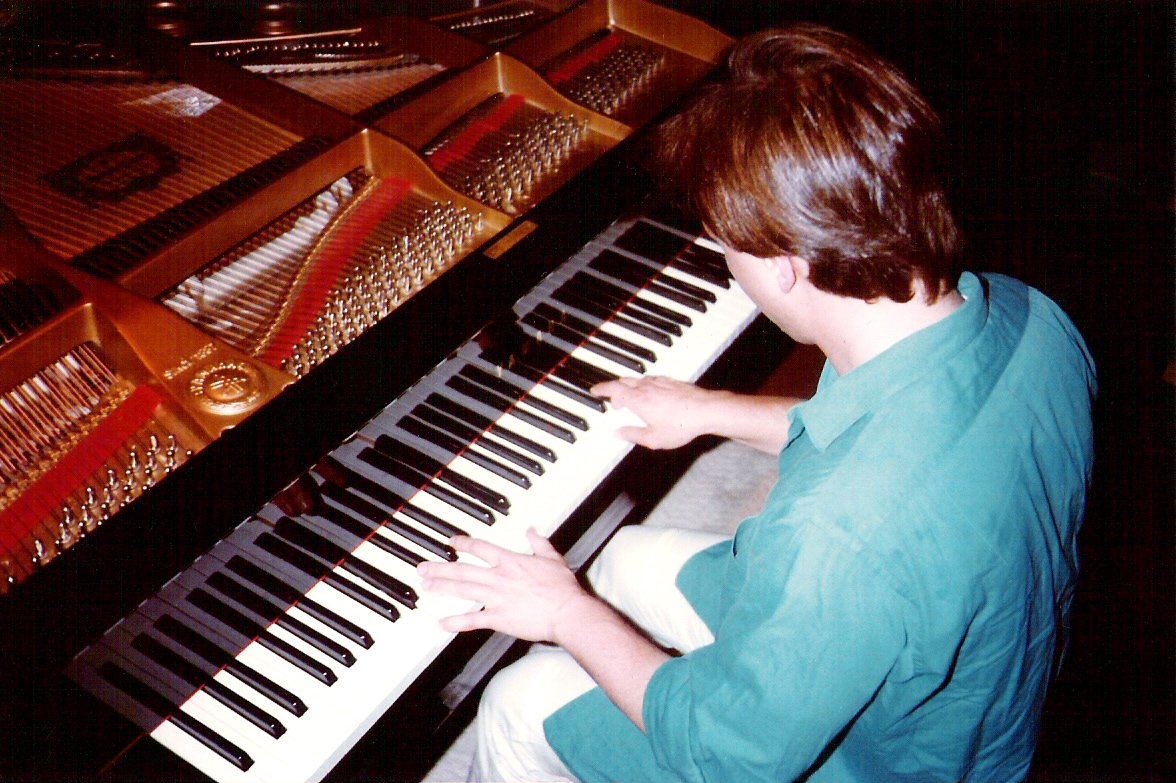
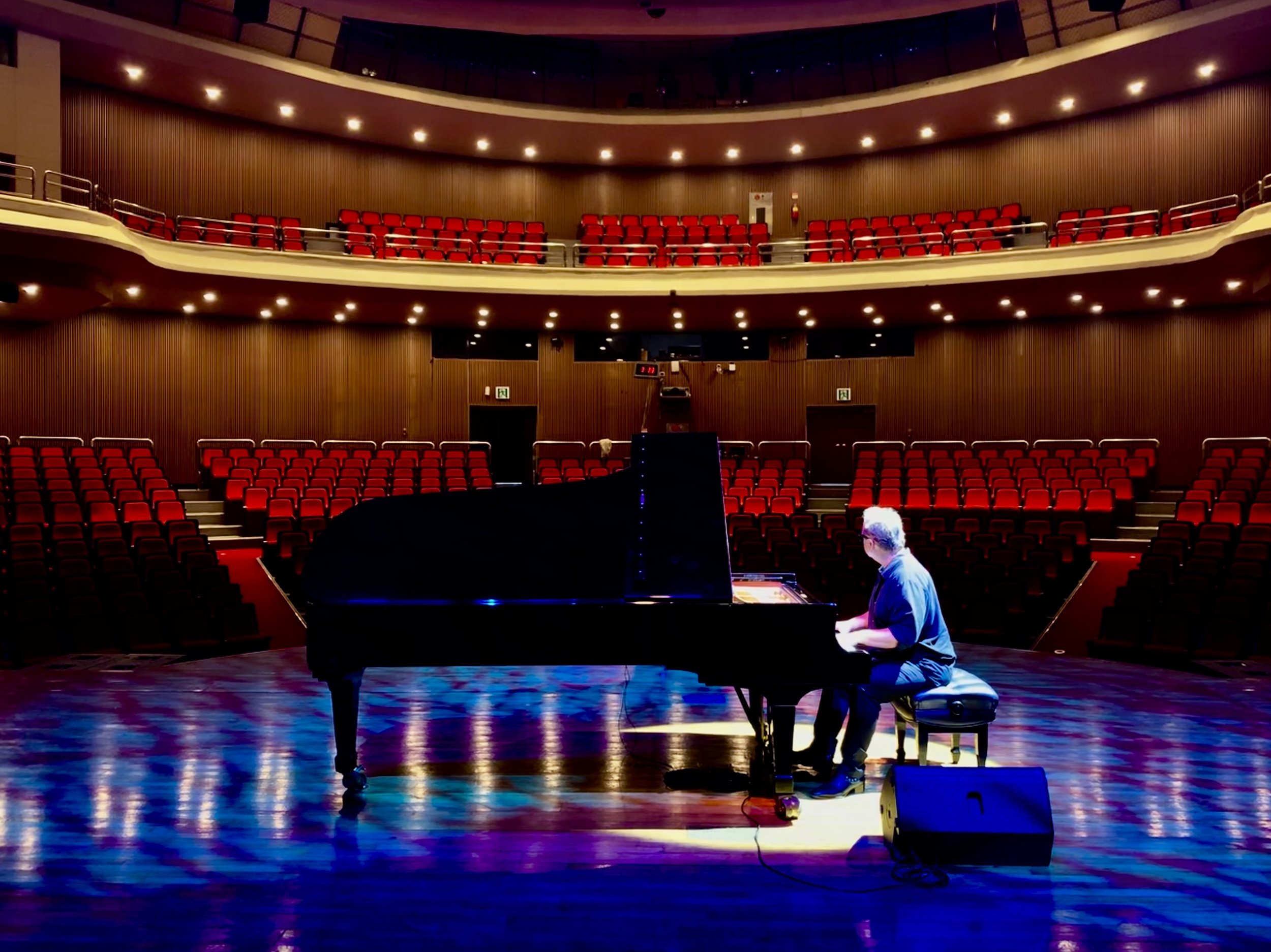
Peter Kater was born to German parents in the Bavarian city of Munich. At the age of seven, shortly after his family moved to New Jersey, his mother insisted that he begin classical piano lessons.
Peter disliked classical training almost immediately. He found it rigid and constraining, offering little space for creativity or self-expression. Within his first year, he went through three teachers, each declaring him “impossible” and refusing to continue teaching him. Undeterred, his mother simply kept finding another teacher. Under her strict insistence, Peter continued practicing—reluctantly—until he was finally introduced, as a teenager, to a teacher who encouraged improvisation, composition, and personal expression. That single shift changed everything. For the first time, Peter felt fully engaged, inspired, and passionate about music.
At eighteen, Peter left New Jersey with a backpack and his music books and hitchhiked throughout the continental United States for over a year. He slept in parks, on beaches, and along roadsides, supporting himself by playing piano in restaurants and lounges in exchange for tips and meals. After logging more than 30,000 miles on the road, he landed in Boulder, Colorado. The Rocky Mountains felt like home, reminding him of his childhood in the Bavarian Alps. Around this time, he discovered the music of pianist Keith Jarrett, the avant-jazz group Oregon, and the Paul Winter Consort—opening an entirely new musical universe. He began improvising three to four hours a night in clubs and lounges throughout the Boulder and Denver area, sometimes performing five or six nights a week. After several years, he grew tired of the club scene, quit all engagements, and began renting small churches, self-promoting intimate concerts across Colorado.
In 1983, Peter released his first solo piano album, Spirit, featuring original compositions and improvisations. The recording was enthusiastically received, charting in the Top 10 of National Contemporary Jazz airplay. Within just a few years, Peter went from playing small churches to performing in 3,000-seat concert halls and major jazz festivals—all by the age of twenty-seven.
In 1985, actor Robert Redford invited Peter to perform at the newly founded Sundance Institute and Film Festival in Utah. Peter soon became a featured performer at many of Redford’s environmentally focused political fundraisers and events, attended by prominent actors, directors, and cultural figures including Alan Alda, Sidney Pollack, James Brooks, Dave Grusin, Laura Dern, Matthew Broderick, and Ted Turner.
During his years performing throughout Colorado, Peter shared the stage with artists he had admired since his teens, including Dan Fogelberg and John Denver. Denver later asked Peter to coordinate the music for his groundbreaking Choices for the Future symposiums held each summer in Aspen, Colorado, and invited him to perform at concerts in Japan and at World Forum events for dignitaries and world leaders such as Mikhail Gorbachev and Shirley MacLaine. Their collaboration continued for nearly a decade until Denver’s untimely death in 1997.
Peter’s music also attracted the attention of legendary New York director and Circle Repertory Theater co-founder Marshall Mason and Pulitzer Prize–winning playwright Lanford Wilson. Peter composed the score for their Tony Award–winning Broadway production of Burn This, starring John Malkovich and Joan Allen, which ran for over a year. In the years that followed, Peter became a core member of their creative team, scoring music for eleven On- and Off-Broadway productions to widespread critical acclaim. As his reputation grew internationally, Peter expanded his work into television and film, while also collaborating with environmental and humanitarian organizations including Greenpeace, the National Wildlife Federation, The Nature Conservancy, and ChildReach.
In 1989, a close friend introduced Peter to a cassette titled Earth Spirit by Native American flutist R. Carlos Nakai. He was deeply moved by the flute’s earthiness and emotional resonance. Peter sought out Nakai, and the two entered the studio together. The collaboration felt effortless, as if they had been playing together for years. Their first album, Natives, was completed in just a few hours. What Peter initially viewed as a personal side project soon became a defining chapter of his career. While his contemporary jazz recordings such as Coming Home, Two Hearts, Gateway, and Rooftops continued to chart in the Top 10 nationally, his albums with R. Carlos Nakai achieved remarkable success in alternative markets—selling hundreds of thousands of copies and cultivating a deeply devoted and personal fan base. The profound satisfaction Peter found in this collaboration led him away from traditional jazz and toward music rooted in healing, intimacy, and emotional depth.
Recognizing a growing need for music that actively supported the healing arts, Peter began creating recordings designed to facilitate deep personal and spiritual transformation. Albums such as Compassion and Essence offered listeners not only a supportive musical landscape but an invitation to safely explore their emotional and inner lives. Many additional healing-oriented recordings followed, along with further collaborations with R. Carlos Nakai—seven of which charted in the Top 20 of Billboard’s New Age chart.
Inspired by his love of the earth and indigenous cultures, Peter invited numerous indigenous artists to collaborate on his projects, including vocalists Joanne Shenandoah, Bill Miller, Rita Coolidge, and flutists Robert Mirabal, Joseph FireCrow, Mary Youngblood, Douglas Blue Feather, Kevin Locke, Jorge Alfano, and Ara Tokatlian. He also composed two songs for the internationally successful Sacred Spirit recording, which sold over five million copies in Europe alone.
Peter’s evolving body of work found its way into the 2000 and 2004 Olympic Games, the Kentucky Derby, Wild World of Sports, and countless television programs including Good Morning America, Entertainment Tonight, Lifestyles of the Rich & Famous, and Baywatch. His scoring credits include acclaimed television series such as How the West Was Lost, Wild America, Civil War: The Untold Story, Eco-Challenge, Our Time Hell - The Korean War and Joseph Campbell’s Mythos series, as well as films including Sirius, The Legend of Secret Pass, and 10 Questions for the Dalai Lama. He has performed throughout the United States, Europe, Japan, and South Korea, with appearances at the Kennedy Center, Carnegie Hall, JFK Stadium in Washington, D.C., Red Rocks Amphitheatre, and the United Nations in New York City—where he received the prestigious United Nations Environment Leadership Award.
Collaboration has remained a defining element of Peter’s career. He has worked closely with artists including Kenny Loggins, Tibetan flutist Nawang Khechog, guitarist Dominic Miller, sacred chant artist Snatam Kaur, and of course his longstanding collaborator R. Carlos Nakai. He has also performed and recorded with musicians such as Paul McCandless, David Darling, Tony Levin, and Brazilian cellist Jaques Morelenbaum.
Often described as prolific and gifted with an exceptional melodic sensibility, Peter’s creative output continues to be fueled by his passion for self-exploration, the healing arts, and the natural world. Over a career spanning more than four decades, he has released over seventy albums, sold millions of recordings and billions of streams worldwide, scored more than one hundred television, film, and theatrical productions—including eleven Broadway and Off-Broadway plays—and received numerous honors, including fourteen Grammy® nominations and two Grammy® Award wins for Dancing on Water (2017) and Wings (2019). Most importantly, his music has uplifted, soothed, healed, and inspired millions of listeners around the world.
Today, Peter brings his lifelong commitment to inner inquiry, embodiment, and transformation beyond the concert hall and into immersive retreat experiences across the United States. Drawing from decades of psychological exploration, somatic awareness, and spiritual practice, he weaves live music, breathwork, authentic relating, and trust-building practices into weekend and week-long retreats that invite participants into deeper presence, connection, and vitality. These gatherings—often described as profound and life-changing—reflect Peter’s ongoing devotion to music not merely as performance, but as a living, catalytic force for personal awakening and human connection.